
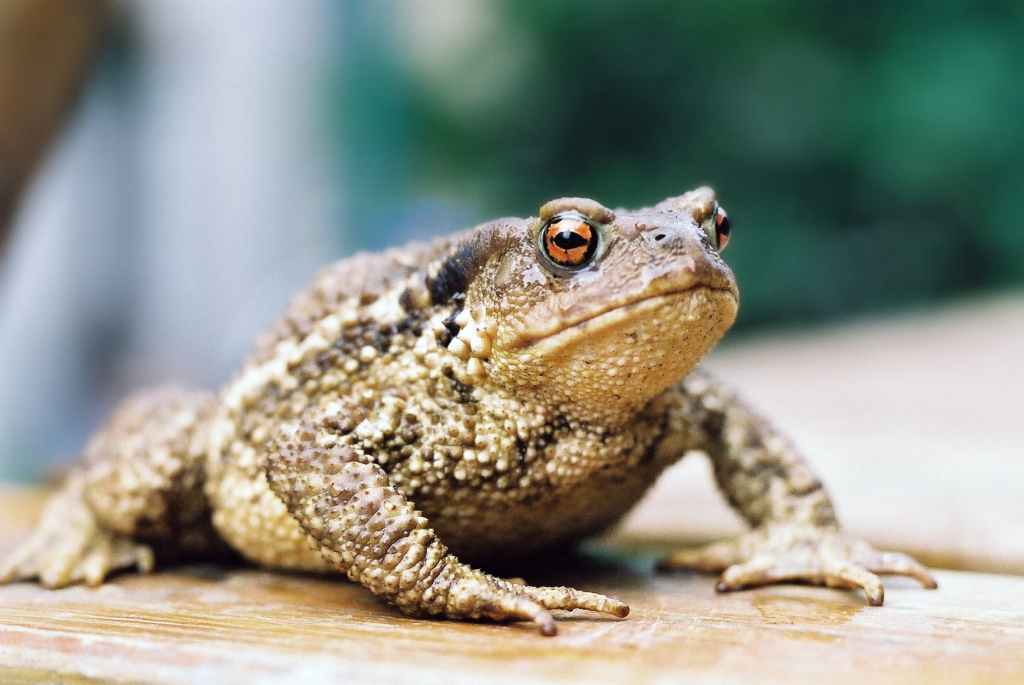
I was twelve when I first made a grown man gasp in fear.
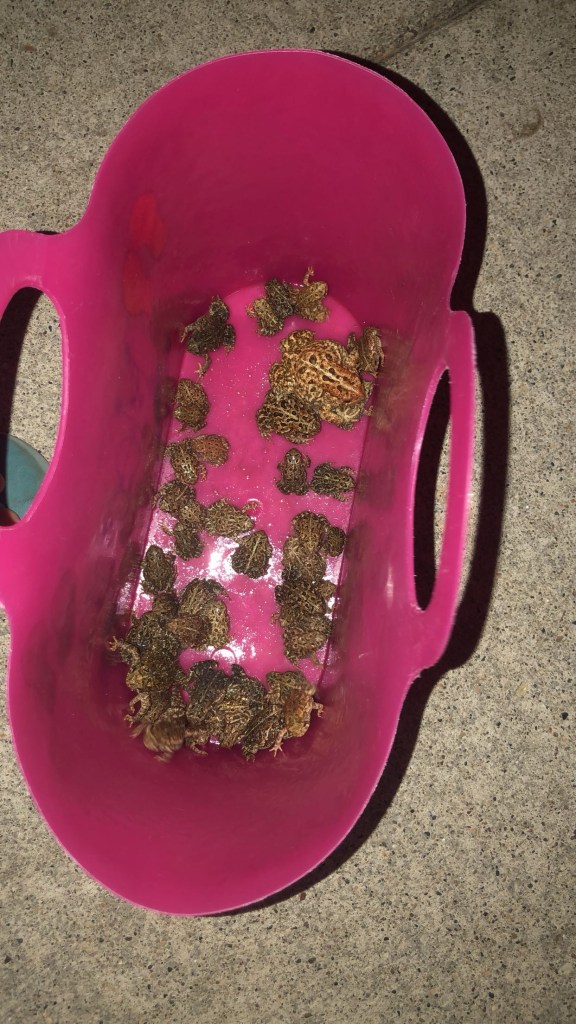
It was a humid, summer night, and I was strolling down the path of my family’s lake house. My younger cousin, Berkley, was with me; she was four at the time. She held a pink bucket from her grubby fingers and swung it between us as we walked. On this night we were partaking in our favorite activity: treasure hunting. It was a good night. Our bucket was almost halfway full.
Walking towards us on the sidewalk, a man from the neighboring house was enjoying a nighttime stroll. When he approached us, he asked us how the night was going. He was probably concerned why two very young girls were out walking alone at night.
“Treasure hunting,” I said. That’s when he noticed the bucket clutched behind Berkley’s back. He crouched down to her, smiling wide.
“What do ya got there,” he asked, trying to peer behind her back. He was probably expecting rocks, seashells, or maybe even bottlecaps
She brought the bucket from behind her back, and the man fell back onto his heels, gasping at the sight.
He was not expecting the bucket to be half full of toads.
Every year Berkley and I do this. We call it toad hunting. We walk around at night and fill our bucket with toads we find on sidewalks, streets, or pools. Then, we carry them back to the lake and put them in their correct habitat. However, toads are currently facing extinction. I’ve seen the effects of this in real-time. Every year, our pink bucket has gotten lighter and lighter. Last year, we were only able to find three toads to bring back to the lake. Because of climate change, disease, and habitat loss, toads are unable to repopulate fast enough to balance out the rate at which they are declining. If nothing is done to stop this decline, toads may disappear completely.
My entire life, I have tried to convince people that toads are friendly and fun to play with, but a majority of people harbor a fear of toads. Many are scared that toads are harmful; in reality, there are only two species that are actually dangerous to humans–the Cane Toad and the Colorado River Toad. While these two toads can cause some slight poison sickness, they cannot actually kill humans. However, most people do not have to worry about these species because the Cane Toad and the Colorado River Toad are generally found in remote forests and places where humans do not go. As for the rest of the toad species, they do not bite, they are not poisonous, and, contrary to popular belief, they do not give people warts. The only effect these toads can have on a human is a slight allergic reaction or an irritation of the skin (“Toads”). To most people, common toads are completely harmless and do nothing to warrant the fear that they receive.
The main contributor to the decline in toads is climate change. The changing temperature is harmful to toads for a variety of reasons, the first being the disease Chytridiomycosis. Chytridiomycosis affects the vital functions of a toad’s skin. It is caused by the fungus Batrachochytrium dendrobatidis (BD). When the temperature shifts, toads become more susceptible to the infection. This disease is incredibly deadly to toads because, unlike humans, toads use their skin as more than a barrier from the outside world. A toad’s skin acts as its respiratory system and excretory system, and when that skin is compromised, the consequences are usually lethal. According to National Geographic, “Of the chytrid-stricken species, 90 have gone extinct or are presumed extinct in the wild. Another 124 species have declined in number by more than 90 percent,” (Greshko). Toad species are at a rapid decline because of this illness. One way to tell if a toad has this disease is the color of its skin. Toads infected with Chytridiomycosis will have a white tint to them. When I was thirteen, I found an infected toad during my family’s trip to Yellowstone. I posted a selfie with it to my newly created Instagram account with the caption #rarefind. I thought I had discovered a rare albino toad. A random person in my comments informed me that it was just sick and it probably died after I set it down. Needless to say, I deleted the picture after reading the comment.
Along with being incredibly deadly, Chytridiomycosis is also astonishingly contagious. Vox Media interviewed Richard Knapp, a research biologist for UC Santa Barbara’s Marine Science Institute, to explain the spread of the disease. He said, “in a matter of weeks, typically, all the adults are killed; all the juveniles are killed as well… What’s left behind are tadpoles that are infected with the disease. They don’t die until they metamorphose — then they die as well. Within a year or two of the fungus arriving … you’ve gone from hundreds of animals or thousands, to nothing. Truly nothing,” (Resnick). The Chytridiomycosis disease is the toad equivalent of an apocalypse–there are no survivors and no chance of escaping the disease in the infected areas.
Climate change is also causing problems in the eggs of toads. As the temperature changes, frog and toad species are beginning to breed earlier than usual. Because of this, tadpoles are hatching too soon and running into a variety of problems. One of these issues is a winter-relapse. When frog embryos develop too early, they are at risk of hatching under frozen ice. The ice traps them in and separates them from the resources they need. The ice sheets can also end up crushing the eggs or embryos (Nealon). Due to the changing climates, the toads’ breeding patterns are being altered and shifted, making the hatching of eggs more difficult for the embryos inside of them. When I was a kid, I thought the lake ecosystem continued to live on when the ice froze over. In my mind, the little world of fish, turtles, and toads all lived happily under the cold barrier. Now, I imagine the tadpoles banging against the ice, trying to get to air, food, and their mother.
Aside from climate change, toads are facing many problems stemming from humans and other predators. The main one is habitat loss. Ponds and lakes where toads live are continuously being turned into buildings, parking lots, or being cleared away to make room for future construction projects. In doing this, people destroy eggs, adult toads, and the ecosystem in which they live. If toads happen to survive the loss of their habitat, they are usually killed by the people and machinery that come to build after the destruction.
In my neighborhood, there used to be a set of grass and rock patches that we called the toad hunting grounds. The neighbor kids and I would race from place to place, trespassing on private property and collecting the toads from dirt mounds, electric boxes, and piles of wood. We would stuff them in our pockets and bring them back to the pond behind our houses. Now, our toad hunting grounds have been filled with houses, banks, and insurance buildings. Even the pond is almost gone–drying up with every new house added around it. The toads are still there, and I’m sure the younger generations of the neighborhood have created new toad hunting grounds, but soon the entire neighborhood will be full of houses and the pond will dry up completely. When that happens, we’ll have nowhere to bring the toads back to because their natural habitat will be gone. Because of this, their chance of survival plummets as they are forced to live amongst the humans, cars, and pets of the suburbs.
There are also types of habitat loss that have nothing to do with new construction. These include habitat destruction, habitat fragmentation, and habitat degradation (“Habitat Loss”). Because of this loss of natural habitats, the toads are struggling to find suitable places to live and lay their eggs. When their ecosystem is destroyed, there is almost no chance of the toads’ survival.
In general, humans are the main cause of the toads’ decline. This is sickly ironic because they are used in a variety of ways to help humans. Even if a person doesn’t like toads, there are reasons to want to stop their extinction. One of the main reasons is their contribution to modern medicine. According to a study by the National Library of Medicine, “As a creature, the toad has made outstanding contributions to human health… (and) the toad continues to be essential for the health of mankind. Toads have been recorded as an invaluable source of medicine for humans in ancient and modern Chinese medicine, as well as in modern scientific research” (Yang). There are around fifty species of toads and frogs that are in use in modern medicine practices. Toads have been used in the treatments of infections, bites, cancer, heart disorders, hemorrhages, allergies, inflammation, pain and even AIDS (Rodríguez). The research done on toads has led to incredible breakthroughs in the medical community. However, there is more research to be done. Scientists have many specific species and breeds of toads that still need to be studied and researched. If they disappear before research can be done, possible medical discoveries could be lost forever.
Another reason why people may want toads to stick around is the research scientists are doing for mental health. Texas Tech is currently studying toads and frogs to discover how their reflexes relate to humans. This can someday lead to better diagnoses for stress, anxiety, and post-traumatic stress disorder (Michael). There is also research being done into the effects of inhaling toad secretions. According to a study done by the National Library of Medicine, inhaling vapor from dried toad secretion containing 5-MeO-DMT leads to an increase in satisfaction with life and convergent thinking. It also leads to a decrease in depression, anxiety, and stress (Uthaug). This is still a relatively new concept, and scientists are continuing to research the effects of this drug; however, the results are promising enough that multiple grants have been given and the research has significant funding. Overall, toads are incredibly important in the scientific community. Without them, specific research projects would have to be canceled; this would cause possible discoveries based on particular species to become impossible to uncover.
While the extinction of toads seems like an impossible issue, there are things that people can do to help. Creating habitats for toads is one way to ensure a safe place for them to live. Piles of logs, rock gardens, and ponds are the spots that toads usually gravitate towards to lay their eggs. People can create these habitats and provide a family of toads with a place to live. In my backyard, I have a big rock pile and a bucket of water that I encourage animals to drink out of. If people don’t want to invite toads to make a home on their property, there are other things to be done.
Many conservation programs are in need of donations. They receive grants and funds from the government, but unfortunately, it is not enough to make a real difference. Organizations like the Amphibian Conservation Organization, The Wildlife Conservation Project, The World Wildlife Fund, and The Endangered Species Act are good examples of places that are always accepting donations. These organizations go out and create new habitats for toads. They also fund research against the Chytridiomycosis disease and its spread. The Endangered Species Act in specific is working really hard to get all species of toads protected under their act and considered an endangered species. Personally, I have a repeating donation of five dollars set up for each month. That’s only sixty dollars over the course of a year, but any amount of money can be useful in their efforts.
Even if a person doesn’t want to spend any money, they can still help save the toads. It can be as simple as not using pesticides next to bodies of water. Another easy thing people can do is to not contribute to new developments on lakes and ponds. Last but not least, simply being mindful of the effect that certain actions have on climate change. Most of climate change is caused by large companies, but there are things that everyone can do to help such as carpooling, using less water, and turning lights on when they are not in use.
If a person wants a more hands-on approach to saving the toads, they can go out, collect the toads from the unwanted places, and bring them back to a safe habitat. Toads are wanderers; they like to hop into streets, pools, and sidewalks where they are in danger of being run over, drowned, or smushed. Grabbing the toad from these unsafe places and bringing it back to its habitat can be life-saving. Who knows? Maybe you could even buy yourself a pink bucket and make a tradition of it.
I’ve been a lover of toads my entire childhood, and I will continue to be a toad lover long into my adulthood. I believe that every generation should be able to experience the joys of toad hunting, and, because of that, I do everything in my power to help the fight against the extinction of toads. The greater the amount of people that help, the more likely it is that toads will have a chance at survival. There are toad hunting grounds in every neighborhood, they just need to be found.
Works Cited
Greshko, Michael. “Amphibian ‘Apocalypse’ Caused by Most Destructive Pathogen Ever.” Animals, National Geographic, 4 May 2021, https://www.nationalgeographic.com/animals/article/amphibian-apocalypse-frogs-salamanders-worst-chytrid-fungus.
“Habitat Loss.” National Wildlife Federation, https://www.nwf.org/Educational-Resources/Wildlife-Guide/Threats-to-Wildlife/Habitat-Loss.
Michael, Karen. “Texas Tech Today.” TTU, https://today.ttu.edu/posts/2019/06/Stories/scientists-study-frog-fear-help-humans.
Nealon, Grace. “Frogs Are Disappearing and Climate Change Could Be to Blame.” TheGIST, 24 Mar. 2017, https://the-gist.org/2020/04/frogs-are-disappearing-climate-change/#easy-footnote-bottom-9-11953.
Resnick, Brian. “What We Lose When We Lose the World’s Frogs.” Vox, Vox, 14 Oct. 2016, https://www.vox.com/science-and-health/2016/10/14/13147056/amphibian-extinction-frog-bd.
Rodríguez, C., et al. “Frog Toxins for Medicine.” Smithsonian Tropical Research Institute, Journal of Ethnopharmacology, 15 Jan. 2018, https://stri.si.edu/story/frog-toxins-medicine.
“Toads.” National Wildlife Federation, https://www.nwf.org/Educational-Resources/Wildlife-Guide/Amphibians/Toads#:~:text=They%20differ%20from%20most%20frogs,and%20allergic%20reactions%20in%20humans.
Uthaug, M V, et al. “A Single Inhalation of Vapor from Dried Toad Secretion Containing 5-Methoxy-N,N-Dimethyltryptamine (5-MEO-DMT) in a Naturalistic Setting Is Related to Sustained Enhancement of Satisfaction with Life, Mindfulness-Related Capacities, and a Decrement of Psychopathological Symptoms.” National Library of Medicine, Springer Berlin Heidelberg, Sept. 2019, https://www.ncbi.nlm.nih.gov/pmc/articles/PMC6695371/.
Yang, Qian, et al. “Angel of Human Health: Current Research Updates in Toad Medicine.” American Journal of Translational Research, e-Century Publishing Corporation, 15 Jan. 2015, https://www.ncbi.nlm.nih.gov/pmc/articles/PMC4346519/.
 meganbrownwrites.com
Leave a comment